
Almost everyone who starts EMS training asks the same first question: how many times a week should you do EMS? Because a single session lasts only 20 minutes, it is tempting to think “if I train every day, I will get results faster.” However, electrical muscle stimulation works the muscles far more intensely and deeply than conventional training, so session frequency, duration and recovery directly determine the quality of your results. In this guide, based on scientific studies and real-world practice, we explain the ideal EMS session frequency, sample weekly plans for different goals and how to avoid overtraining.
Why Is EMS Training Planned Differently From Conventional Training?
In conventional strength training, the brain recruits muscle fibres gradually according to the load being lifted. Small, slow-twitch fibres work first; large fast-twitch fibres are only activated when the load becomes heavy. With EMS technology, the electrical impulse reaches the motor nerves directly and forces a large number of muscle fibres, including the deep muscle layers, to contract at the same time. That is why a 20-minute whole-body EMS session can place a load on the muscular system close to that of a gym workout lasting hours.
This intensity has two consequences. First, you get high efficiency in a short time; for busy professionals, parents and managers, this is the biggest advantage of EMS. Second, the muscles need enough time to recover. Muscle growth and strength gains do not happen during training but during the repair process afterwards. If this process, which we explain in detail in our article on the effect of EMS on muscle repair , is skipped, progress stalls and the risk of injury increases.
What Does the Science Say? The Ideal EMS Session Frequency
Most studies on whole-body EMS (WB-EMS) use a similar protocol: 1–2 sessions per week, about 20 minutes per session and at least 48 hours of rest between sessions. Studies carried out by many research groups, led by the University of Erlangen-Nuremberg in Germany, report that EMS programmes applied in this way produce significant improvements in muscle mass, strength and waist circumference.
The WB-EMS safety recommendations published by international expert groups support the same framework. The main principles in these recommendations are:
- Initial phase: One session per week at low to moderate intensity is recommended for the first 6–8 weeks.
- Rest period: Leave at least 4 days (for beginners) or at least 48 hours (for adapted users) between two sessions that stimulate the same muscle groups.
- Session length: Whole-body sessions should not exceed 20 minutes.
- Hydration: Drink enough fluids before and after the session.
- Expert supervision: Sessions must always be carried out under the supervision of a trained EMS coach.
In short, “more is better” does not apply to EMS. Two regular sessions a week deliver far better results than four irregular sessions done while tired.
EMS Session Frequency by Goal
The ideal frequency depends on your goal, fitness level and lifestyle. The recommendations below provide a general framework for healthy adults; always create your personal plan together with your coach.
Beginners
For someone new to EMS, the first month is the period in which the body gets used to electrical stimulation. During this period, one session per week is enough. Muscle soreness lasting 2–3 days after the first sessions is normal and is the body’s natural reaction to a new stimulus. If you are curious about what to expect in your first month, take a look at our guide to the first 30 days of EMS training . After 4–6 weeks, once the soreness has eased, you can move up to two sessions per week.
Weight Loss and Fat Burning
For those aiming to lose fat, the ideal routine is two EMS sessions per week complemented by light to moderate cardio activity. EMS preserves and builds muscle mass, which supports your resting metabolic rate. However, the main driver of fat loss is still your calorie balance. We cover the real role of EMS in weight loss with scientific data in our article on losing weight with EMS .
Muscle Development and Toning
Those aiming for muscle tone, firmness and strength gains get the best results with two sessions per week . Leaving at least two days between sessions allows the muscles to repair and grow stronger. In this group, paying attention to protein intake and sleep quality noticeably increases the effect of EMS.
Athletes and Performance
Active athletes usually use EMS to support their existing training programme. In this case, EMS adds to the total weekly training load. one session per weekis preferred during the season, and two sessions per week under the coach’s supervision in the pre-season preparation phase. It is important not to schedule an EMS session right before a heavy leg day or a match day.
Back Pain, Posture and Rehabilitation
For people with poor posture and lower or upper back pain, 1–2 sessions per week are usually applied at low intensity. When used for rehabilitation, the session plan must be set by a physiotherapist or physician. You can read about these applications in our article on rehabilitation with EMS .
Adults Over 50
EMS is very valuable for slowing age-related muscle loss because it works the muscles without loading the joints. For this group, it is recommended to start with one session per week , move up to two sessions per week if it is well tolerated and keep rest periods longer.
How Long Should an EMS Session Last?
A standard whole-body EMS session lasts about 20 minutes , excluding warm-up and cool-down. This is no coincidence: under electrical stimulation, muscles fatigue to a high degree in a short time, and every minute added after 20 minutes brings more fatigue and risk of muscle damage than benefit. Some studios run programmes of up to 25 minutes, but these include the warm-up and cool-down phases. We explain the logic of working the whole body in a short time in our article on whole-body EMS training in 25 minutes .
A typical session consists of the following stages:
- Preparation (3–5 minutes): Moistening the EMS suit, positioning the electrodes and setting the intensity for each muscle group.
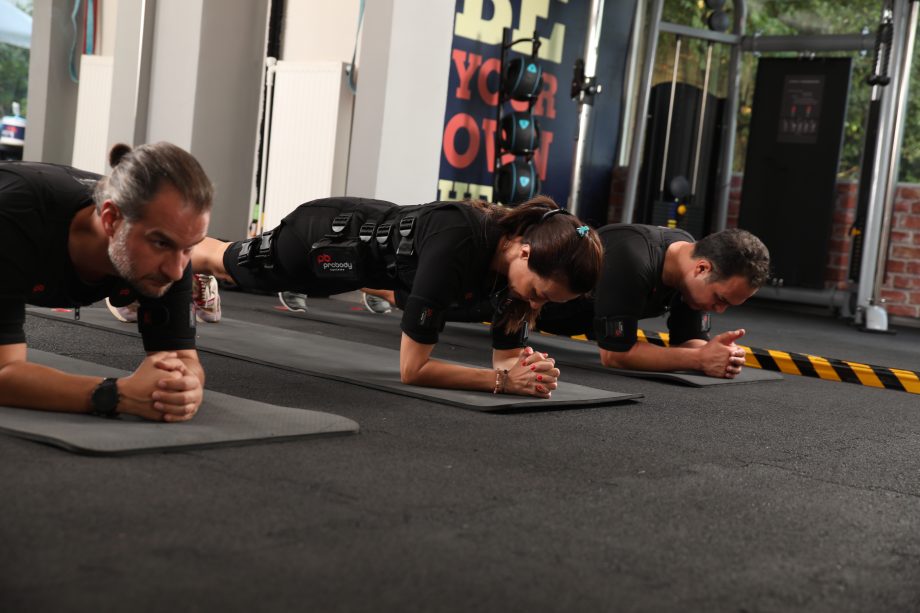
- Main part (about 20 minutes): Simple functional movements such as squats, lunges and planks, combined with stimulation and rest intervals.
- Cool-down (3–5 minutes): A low-frequency programme with a massage effect and light stretching.
Why Is Rest So Important?
After an EMS session, microscopic damage occurs in the muscles. This is a natural process seen in every intense workout and it is what makes the muscle stronger. However, if you start a new intense session before the repair is complete, the body stays in a constant cycle of damage and fatigue. As a result, performance drops, muscle soreness lasts longer and motivation declines.
Overtraining also has a serious side. In EMS sessions performed very frequently at very high intensity, a condition called rhabdomyolysis, in which muscle breakdown products enter the bloodstream, has been reported. This rare but important risk can largely be prevented by following the rules of expert supervision, gradual intensity increases and adequate rest . We address other misconceptions about EMS in our article on common myths about EMS .
Signs of Overtraining
If you experience several of the following symptoms at once, it may be time to reduce your session frequency or intensity:
- Muscle soreness that lasts longer than 72 hours and keeps getting worse
- Constant tiredness and poorer sleep quality
- Loss of strength and endurance during training
- A noticeable rise in resting heart rate
- Loss of motivation, restlessness and getting ill frequently
- Dark-coloured urine or excessive muscle swelling (in this case, seek medical help without delay)
Sample Weekly EMS Plans
The plans below are examples for healthy adults. Set your own programme together with your coach, taking your health status and goals into account.
Plan 1: Beginner (First 6 Weeks)
- Monday: 20 minutes of whole-body EMS (low to moderate intensity)
- Wednesday: 30 minutes of brisk walking
- Saturday: 30–40 minutes of light activity (walking, cycling or swimming)
- Other days: Rest, stretching and everyday movement
Plan 2: Weight Loss and Toning
- Monday: 20 minutes of whole-body EMS
- Tuesday: 30–40 minutes of moderate cardio
- Thursday: 20 minutes of whole-body EMS
- Saturday: 45 minutes of outdoor walking or swimming
- Other days: Active recovery
Plan 3: Active Athlete
- Tuesday: 20 minutes of EMS (strength-focused programme)
- Wednesday–Friday: Sport-specific training
- Saturday: Match or high-intensity training
- Sunday: Low-frequency EMS recovery programme or full rest
Tips for Getting the Most Out of Your EMS Sessions
- Be consistent: Consistency is the most important factor in EMS results. Aim to keep up two sessions a week without interruption for at least 8–12 weeks.
- Drink plenty of water: For electrical conduction and muscle recovery, drink at least 500 ml of water before and after the session.
- Do not neglect protein: Eating a meal with good-quality protein within 1–2 hours after the session supports muscle repair.
- Look after your sleep: Most muscle repair happens during sleep. Aim for 7–8 hours of sleep per night.
- Increase intensity gradually: Start your first sessions at a comfortable intensity. Your coach should adjust the intensity in every session according to your body’s response.
- Listen to your body: During illness, extreme fatigue or periods of high stress, postponing the session is a smarter choice than pushing through.
Who Should Be More Careful About EMS Frequency?
EMS is a safe training method for the vast majority of healthy adults. However, people with pacemakers, pregnant women, people with epilepsy, serious cardiovascular disease or an acute infection, those who have recently had surgery and those undergoing tumour treatment should not use EMS or must obtain a physician’s approval. People with chronic conditions such as diabetes or high blood pressure should also consult their doctor before starting. You can read about who EMS is suitable for in detail in our article who is EMS training suitable for .
For Businesses: Session Frequency Planning and Membership Programmes
If you run a gym, Pilates studio or EMS studio, reflecting the right session frequency in your membership programmes improves both client results and business efficiency. Two-session-per-week packages encourage members to come regularly and make the booking calendar predictable. Thanks to individual intensity settings and ready-made training programmes, Probody Systems EMS devices help coaches easily plan the right frequency and intensity for every member. With systems that support multiple users, several members can train in the same time slot, making efficient use of capacity.
Frequently Asked Questions
Can you do EMS every day?
No. Because whole-body EMS sessions work the muscles very intensely, doing them every day is not recommended. Leave at least 48 hours between two sessions so the muscles can recover. For beginners, this period is 4–5 days.
Is one EMS session a week enough?
Yes, one session a week is effective, especially in the initial phase and for goals such as general health, posture or maintaining muscle tone. For faster strength gains and body shaping, two sessions a week give better results.
When do you see EMS results?
With regular sessions, most people start to feel a difference in muscle tone and posture within 4–6 weeks. Measurable changes usually become clear at the end of 8–12-week programmes. We cover this topic in detail in our article how many sessions does EMS take to work .
Can you combine EMS and conventional training in the same week?
Yes. EMS can be combined with cardio and light to moderate training. However, avoid combining a heavy weight-training workout and an EMS session on the same day, and do not work the same muscle groups hard on the day after EMS.
Is muscle soreness after EMS normal?
Mild to moderate muscle soreness lasting 2–3 days after the first sessions is normal. If the pain lasts longer than 72 hours, gets worse or your urine becomes dark, take a break from training and consult a healthcare professional.
Conclusion: Less but Regular Is the Golden Rule of EMS
The formula for success in EMS training is simple: 1–2 sessions per week, about 20 minutes per session and at least 48 hours of rest between sessions. Beginners should start with one session per week and increase to two as the body adapts. Combined with expert supervision, enough water and protein and good-quality sleep, EMS lets you achieve strong results in a short time, even with a busy lifestyle.
If you would like information about professional EMS solutions, device features and business models for your company, you can contact the Probody Systems team and find the system that suits you best together.
