
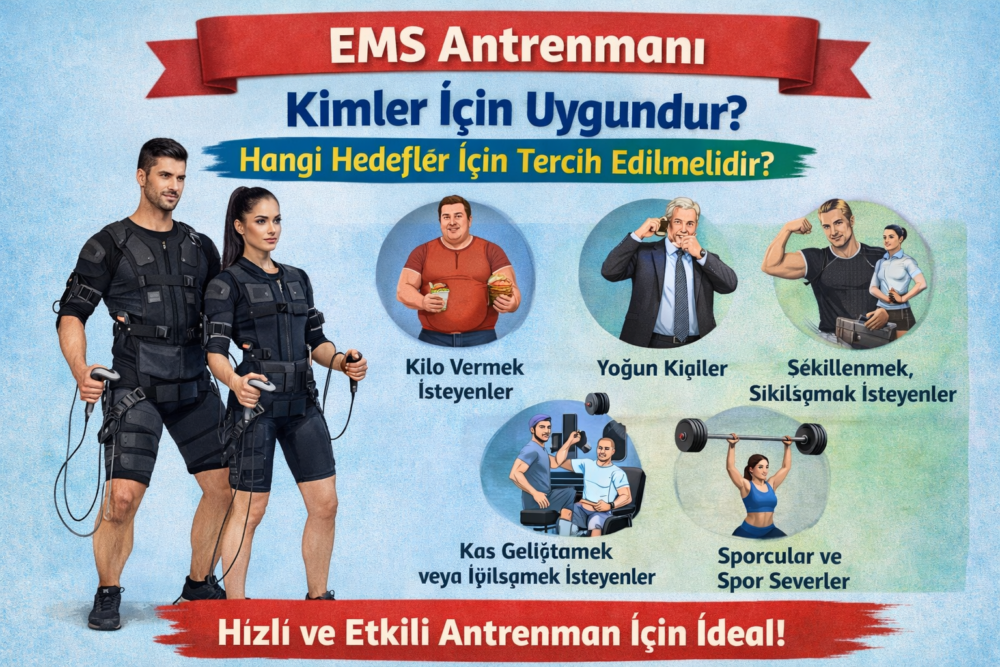
Definition of EMS Training
EMS stands for electromyostimulation and is a technique that works the muscles through electrical stimulation. Similar to the natural contraction of muscles during physical activity, this method triggers muscle contraction with electrical signals applied externally. EMS training is generally used to improve athletes’ performance, develop muscle strength or support certain rehabilitation processes.
This type of training can be carried out in gyms or specialised physical therapy centres. EMS devices work through electrodes placed on the surface of the skin. The electrodes direct the electrical current to specific muscle groups, which causes the muscles to contract. The main aim of EMS training is to make the muscles work more efficiently and increase muscle mass.
EMS training can also be used to reach specific goals. For example, it is frequently chosen for purposes such as improving fitness, increasing muscle tone or isolating specific muscle groups. In this way, athletes can increase the effectiveness of their training by using this method. However, who EMS training is suitable for may differ according to goals. It stands out as a beneficial method especially for people with a sporting background and people with various motivational goals.
Who Is EMS Training Suitable For?
Electromyostimulation (EMS) training is an exercise method that can be suitable for a wide age range. Although it is generally chosen by people aged 18 and over, older people can also use this method if appropriate health conditions are met. People who cannot exercise regularly because of their lifestyle in particular can consider EMS and make their bodies more active with this training method.
For people facing certain health problems, EMS can offer an effective alternative. For example, for people with muscle weakness or limited mobility, EMS training can help with physical rehabilitation. However, it is important for such people to first consult a healthcare professional and for their training programmes to be arranged according to their individual needs.
EMS training is also a very attractive option for people who do not exercise or are just starting out. If this group stays away from conventional training or cannot find time for it, they can use EMS to strengthen their muscles and improve their general physical health. Therefore, in answer to the question of who EMS is suitable for, we can say that this training method can be applied both to various age groups and to people with certain health conditions, with appropriate medical approval.
In conclusion, electromyostimulation training is a suitable alternative for many people with different goals. However, because each person’s needs and health status differ, expert guidance is always necessary.
Benefits of EMS Training
Electrical muscle stimulation (EMS) is attracting attention as an innovative training method for athletes and fitness enthusiasts. By working the muscles through electrical stimulation, EMS training helps them increase their strength, gain volume and develop their endurance. The main benefits of this method include muscle development, fat burning and recovery. When asked who EMS is suitable for, this training technique can be beneficial for people with a wide range of different goals.
Offering an ideal solution for many people, EMS training is an effective alternative for those who want to increase their muscle mass. When combined with conventional training methods, it supports muscle development while also speeding up fat burning. In the fat-burning process, stimulating the muscles helps speed up the body’s metabolism, which leads to more calories being burned. This explains why EMS training is such an attractive option for people aiming to lose weight and improve their body composition.
In addition, EMS training supports muscle recovery and reduces muscle fatigue. Its use to help the muscles recover especially after intense training plays an important role in improving athletes’ performance. Looking at the purposes EMS can be used for, it can be chosen in rehabilitation to increase muscle strength and endurance after injuries, as well as by those who want to raise their sports performance. In these respects, EMS training is gaining an important place in many people’s sporting lives and helps them lead healthier lives.
Setting Goals
Electronic muscle stimulation (EMS) training can be tailored to people’s fitness goals. It can be chosen both for rehabilitation and to improve sports performance. That is why, to answer the question of who EMS is suitable for, people’s goals first need to be identified correctly. When goals are combined with personal motivation, the effectiveness of training increases.
First of all, potential users’ health status, exercise history and physical activity should be assessed. For example, athletes can do EMS training to improve their performance, while people dealing with chronic injuries can consider this method to strengthen their muscles and reduce pain. Therefore, the question of what EMS should be used for should be answered in various ways according to users’ needs and expectations.
Another important point is personal motivation. Everyone’s goals are different; some want to lose weight, others want to increase muscle mass or raise their general fitness level. That is why the question of who can do EMS training is directly related to the goals a person sets. Personal motivation plays a critical role in maintaining training consistency and reaching goals.
In conclusion, for EMS training to be effective, goals and motivations must be clearly defined. Creating a suitable programme in line with users’ personal needs and expectations will make it possible to get the maximum benefit from EMS.
Feelings and Progress After EMS Training
Electromyostimulation (EMS) training leads athletes to experience significant changes both physically and emotionally. The advantages of this type of training are not limited to muscle development; it also affects how they feel after training. After EMS training, athletes usually experience increased energy and motivation. This feeling stands out as the result of effective training and muscle stimulation.
On the other hand, after EMS training some athletes may also experience feelings such as tiredness or muscle soreness. However, this is usually related to the body’s adaptation process, and regular EMS training can help such negative feelings decrease over time. The body adapting to these changes also means better recovery times and improved physical performance. For those looking for a training method and wondering who EMS is suitable for, the experiences of athletes who go through these stages can therefore offer important guidance.
Emotionally, many athletes feel more confident and motivated after EMS training. Studies suggest that people who do EMS training regularly gain self-confidence. This is related not only to physical appearance but also to people feeling more active. EMS training not only increases the necessary muscle strength but also develops mental resilience.
By observing both their physical and emotional development, people who do EMS training can understand how this method can be adapted for different purposes. In conclusion, the answer to the question of who can do EMS training applies to anyone who wants to experience this development and transformation, provided there are no medical contraindications.
Which Athletes Should Choose EMS Training?
Electrical muscle stimulation (EMS) training offers a variety of benefits for certain groups. Professional athletes in particular can choose the EMS method to support their training and improve their performance. This training method can be extremely effective in reaching goals such as increasing muscle strength, improving endurance and speeding up recovery. People in performance-oriented sports should therefore consider EMS training.
Amateur athletes can also improve their competitive performance by adopting EMS training. Such people usually work towards fitness goals at a certain level. EMS training helps strengthen their physical condition while also potentially reducing the risk of injury. This makes it sensible for amateur athletes to include EMS in their training programmes.
People going through rehabilitation can also benefit greatly from EMS training. It is used to restore muscle strength after injuries, increase mobility and improve general physical condition. Whatever purpose EMS is chosen for, it should be applied specifically according to the needs of people in rehabilitation. For this group, it is important to encourage muscle activation with gentle, controlled sessions.
In conclusion, professional athletes, amateur athletes and people in rehabilitation may choose EMS training for different reasons. With the right goals and needs, a clear understanding of who EMS is suitable for can be developed.
Risks of EMS Training and Points to Consider
Electrical muscle stimulation (EMS) can be an effective way to support training; however, there are some risks and contraindications to consider when using this method. First, when it comes to who EMS is suitable for, it is very important to assess people according to their health status. People with chronic health problems such as heart disease, high blood pressure or diabetes in particular must consult a healthcare professional before doing EMS training.
When not applied correctly, EMS training can cause muscle injuries and skin irritation. Excessive stimulation during sessions can overload the muscles and may lead to long rehabilitation periods. In addition, an important point that follows the question of who can do EMS training is choosing devices suitable for users. Using the wrong device can produce ineffective results and may also lead to injuries.
It is also known that EMS training is not recommended for pregnant women, and people with severe obesity should only train under close professional supervision. People should be sensitive to their bodies and remember to stop the session if they feel any discomfort. Whatever purpose EMS is used for, carrying out training with a professional guide will minimise possible health risks. In conclusion, the necessary precautions and professional advice are very important for EMS training to be carried out effectively and safely.
Different EMS Devices and Models
Electromyostimulation (EMS) training is carried out with different devices and models adapted to reach various goals. To answer the question of who EMS is suitable for, it is important first to look at the types of devices available and their areas of use. While some of the EMS devices on the market are designed to increase general strength and endurance, others have been developed for more specific goals.
For example, professional EMS devices designed specifically for athletes can usually operate across a wider range of frequencies. Such devices are preferred by people who want to increase muscle strength and optimise performance. EMS devices used in rehabilitation help reactivate and strengthen muscles after injury.
At the same time, more compact EMS models suitable for home use are also available. These models allow users to work muscle groups on their own. These devices offer an ideal solution for people who cannot exercise or do not have time for intensive training. Such EMS devices are also widely used to increase body tone and support fat burning. It is important for people looking for an answer to the question of who can do EMS training to consider different devices and their features according to their circumstances.
In short, EMS devices and models are very diverse and each is designed to meet different needs. The answer to the question of what EMS is used for varies depending on people’s goals. That is why choosing the most suitable device after defining your training goals is an important step on the road to success.
Conclusion and Assessment
EMS training is an exercise method preferred by many people because it provides muscle stimulation. Essentially, this system supports the muscles’ natural work and is suitable for people who want to reach different goals. However, because each person’s fitness history, goals and health status differ, the question of who EMS is suitable for is important.
In general, EMS training can be used to strengthen weak muscle groups, improve body composition or support prescribed rehabilitation programmes. It becomes beneficial especially for athletes who want to focus on specific muscle groups, people with no history of physical activity and those recovering from serious injuries. That is why the answer to the question of who can do EMS training varies depending on the person’s aim.
For people with maintenance and weight-loss goals, EMS can also help strengthen weak muscles by increasing muscle tone. However, personal medical history and current condition should be taken into account before using this method. After a proper assessment, a personalised training programme should be prepared.
In conclusion, EMS training offers a flexible system that can be used for a variety of goals. However, when considering who this training model is suitable for, people’s needs and general health should be examined in detail. To achieve healthy results, it is recommended that it be carried out under the guidance of an expert trainer.
