
Introduction to EMS Training
Electrical muscle stimulation (EMS) is a training technology that works by stimulating the muscles with electrical signals. Alongside physical exercise, this method has become very popular in health and rehabilitation. While EMS makes the muscles work more effectively, it also adds significant value to training plans for beginners.
In addition to conventional exercise methods, EMS training allows the muscles to develop faster and more effectively. When electrodes are placed on the skin, they target specific muscle groups and cause the muscles to contract. For EMS beginners in particular, it offers the potential to increase muscle activation and accelerate muscle tissue development. These features allow training to deliver more effective results in a shorter time.
In recent years, the increase in the popularity of EMS training has also been linked to changing training expectations. People want faster, more effective results and are therefore turning from conventional exercise methods to EMS training. In particular, first-month EMS results are a source of motivation for many people, and understanding how this process works is very important for beginners.
The results achieved encourage people to commit more to their training plans and attract the interest of more people who want to try the benefits of this type of training. As a distinctive method for muscle development and strength gains, EMS is an attractive alternative for both athletes and fitness enthusiasts.
Advantages of EMS Training
Electromyostimulation (EMS) stands out today as a popular training method. EMS training aims to develop the muscles by stimulating them with electrical impulses. This method offers various benefits in terms of physical fitness goals such as muscle development, fat burning and improving general fitness levels.
First of all, workouts with EMS make the muscles work more effectively. For people new to intensive exercise programmes in particular, expectations of EMS training include increased muscle tone and strength. In addition, EMS training can help the muscles produce more force with less effort, thus supporting muscle development.
This training method is also very effective in reducing the amount of fat in the body. EMS sessions help speed up the metabolism and therefore increase fat burning. Beginners can make noticeable progress even after just a few sessions, which motivates them.
EMS also plays an important role in rehabilitation. For people with muscle weakness, EMS training helps reactivate underused muscles. For example, during recovery from a sports injury, EMS can speed up the muscle’s strength gains and shorten rehabilitation time.
In conclusion, EMS training stands out for the physical and mental benefits it offers beginners. It is an effective method for those who want to achieve noticeable results in a short time and offers important benefits by supporting muscle development and fat loss.
Setting Goals for the First 30 Days
For people new to EMS training, one of the most important steps is setting clear goals. Goal-setting helps you measure your progress and achievements as you exercise. When creating their personal goals, beginners should first set short-term goals. These goals generally cover achievements that can be reached during the first 30 days. For example, concrete goals can be followed, such as doing EMS training once a week or strengthening a particular muscle group.
Setting long-term goals is critical for understanding the results of training. Beginners should review these long-term goals at regular intervals and update them when necessary. This process is also important in terms of first-month EMS results, because seeing the distance covered and the progress made is necessary for maintaining motivation. Reaching short-term goals increases beginners’ motivation and helps them develop a more determined attitude towards reaching their long-term goals.
Maintaining motivation is another element of success in goal-setting. To keep EMS beginners motivated, reminder activities can be included. For example, regularly recording your progress or finding a training partner both provides social support and creates a sense of healthy competition. In this way, expectations of EMS training are met and a more productive experience is achieved.
The First Workout: What to Expect
For new fitness enthusiasts starting EMS training, the first session is as exciting as it is full of uncertainty. EMS (electromyostimulation) training is a method in which the muscles are worked through electrical stimulation. In the first workout, the equipment used in the studio may include an EMS device, electrodes and, ideally, guidance from a trainer. Before training, it is very important for each participant to create their own body profile and set their goals.
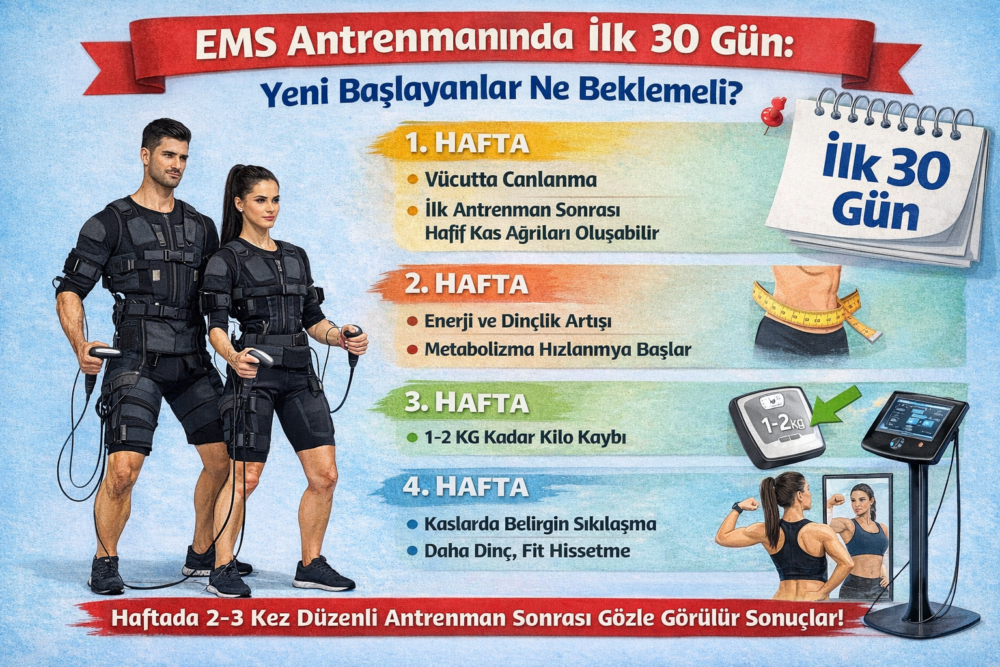
During the first session, participants usually experience a slight tingling sensation. Placing the electrodes on the skin stimulates the muscles and allows you to start training. Although some users feel slight discomfort at first, they are observed to relax once the muscles start working. Among the expectations of EMS training, especially in the first days, mild muscle soreness can be expected; this is considered a sign that the training was effective.
The first EMS workout can give participants a satisfying feeling. As a result, most people are motivated to adopt a structured approach to strengthening their muscles. Combined with the sense of relief felt at the end of the workout, first-month EMS results become a source of motivation for participants. This first training experience provides an important starting point for their personal development and fitness goals.
How Often Should You Train?
For people new to EMS training, it is extremely important to understand training frequency, session length and rest periods. The recommended training frequency for beginners is generally one session per week. This gives the body enough time to get used to EMS and reduces the risk of overloading.
Each whole-body EMS session should last about 20 minutes. This duration is ideal for working the body effectively. While the electrical stimulation applied to the muscles during training makes them work more intensely, effective results can be achieved together with short rest intervals. That is why resting for several days after a session will be beneficial for the body, especially at the beginning.
Later, as people feel more comfortable, training frequency can be increased to two sessions per week, with at least 48 hours between them. However, the point beginners should pay attention to is giving their bodies rest breaks; this is necessary for the muscles to repair and strengthen themselves. For EMS beginners in particular, it is important to manage the strain that exercise creates. In this way, realistic goals can be set in line with training expectations and the body has the chance to keep up with progress. It should not be forgotten that every person’s body and fitness level are different, so training programmes should be created according to personal goals and perceptions.
The Role of Nutrition
As a high-intensity form of exercise, EMS training is based on working the muscles through electrical stimulation. For this type of training to be effective, it is essential to create a suitable nutrition plan. Nutrition not only provides energy but also involves taking in the nutrients that support muscle development.
First of all, given the intensity of the training sessions, increasing protein intake is recommended. Protein is the most important nutrient supporting muscle repair and growth. The daily protein intake recommended for EMS beginners generally ranges from 1.6 to 2.2 grams per kilogram of body weight. Getting this amount from the right sources will also be effective in increasing endurance along with muscle development.
In addition, hydration is a critical factor in the success of EMS training. Water loss can have a negative effect on performance. It is therefore necessary to pay attention to adequate fluid intake before and after training. Heavy meals should be avoided immediately before training and fluid intake should be increased. After training, it is recommended to use different drinks to replace lost fluids and electrolytes.
Finally, meals before and after training should be planned to maintain energy levels and speed up muscle recovery. Choosing a light meal containing carbohydrates and protein 1–2 hours before training can raise energy levels. After training, muscle repair should be supported by eating food that contains protein and carbohydrates. In this way, expectations of EMS training will be met more efficiently.
Measuring Progress: How Should It Be Assessed?
For people new to EMS training, assessing the progress made in the first 30 days is very important. In this process, body measurements, performance tracking and feedback play a critical role in understanding how the body is changing. First, you need to take your body measurements at the start. Measurements such as body weight, body fat percentage and waist circumference will form a baseline for first-month EMS results.
In addition, tests that you repeat regularly to track your performance during training will also be useful. Criteria such as maximum repetitions, weights lifted and training time, repeated regularly, can provide useful insights into your EMS training expectations. At the end of the first 30 days, by recording these performance metrics, you will be able to see what progress you have made.
In addition, the changes you feel after training are also important. Factors such as how your muscles respond, your endurance level, your energy level and your general sense of strength are important sources of feedback for EMS beginners. That is why it will be very useful to assess yourself and observe your progress by taking notes after training.
In conclusion, using a combination of different methods to measure your progress during the first 30 days is an effective strategy for clearly assessing your development in EMS training. With the right measurement methods, you can see the effects of your training from every angle and increase your motivation.
Common Misconceptions and Myths
EMS training has gained remarkable popularity in the fitness world in recent years. However, along with this growth, the door has also been opened to misunderstandings and myths. Beginners should not be influenced by this misinformation when setting their expectations for first-month EMS results.
First, the idea that EMS training is a “magic solution” is widespread. As a result, some people think they can achieve a fit body just by using EMS. However, even for EMS beginners, it is very difficult to achieve the desired results unless EMS is supported by regular exercise and balanced nutrition. That is why realistic goals should be set when defining expectations of EMS training, and it should be combined with other sports activities.
Another common misconception is the belief that using EMS devices will rapidly increase muscle mass and burn fat perfectly. In reality, reaching such results takes time and requires regular training as well as consideration of personal physiological factors. Although EMS is an effective method for stimulating and strengthening the muscles, it is not enough on its own.
In conclusion, staying away from misconceptions is critical on the road to success in EMS training. Beginners should be able to tell the difference between facts and misleading information. Accurate information from experts and experienced people during training will increase the success achieved with EMS.
Next Steps in EMS Training
EMS training offers beginners an innovative approach that supports stimulating and strengthening the muscles. During the first 30 days, participants can expect to see a variety of progress. However, at the end of this period, it is also very important to assess the effectiveness of training and plan the next steps. First, participants should assess their own progress and review to what extent they have reached their initial goals.
By taking into account the experience and results gained during EMS training, beginners can decide which approaches are more effective for reaching their goals. Setting longer-term goals can bring more significant improvements in physical condition and performance. At this point, defining specific milestones and recording progress is extremely useful.
In addition, in line with expectations of EMS training, moving up to two sessions per week can unlock further potential from the progress already made. EMS beginners should be patient if progress is slow and, when necessary, benefit from expert guidance to keep their training programmes up to date.
Finally, it is also useful for participants to consider integrating other training methods in this process. A plan supported by different types of exercise can have a positive effect on first-month EMS results. By assessing regularly and taking strategic steps based on these observations, participants can continue to achieve successful results with EMS training.
