
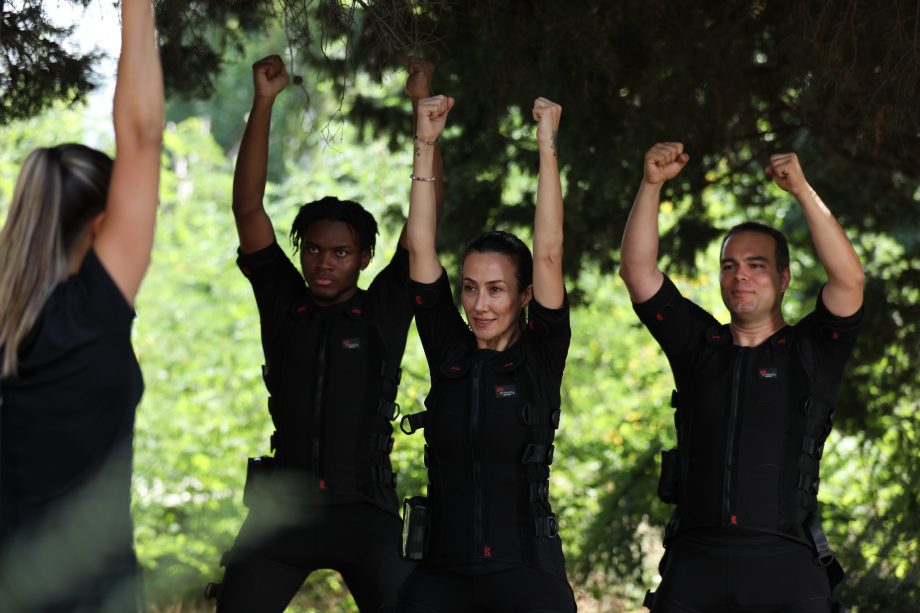
Short answer: The most effective way to stay in shape in winter is to lock short but regular workouts into your weekly schedule, keep your daily step count up, eat a protein-rich diet and look after your sleep. Because a session lasts about 20 minutes, 1–2 whole-body EMS sessions a week is a sustainable option on busy, dark winter days. Below you will find a practical sample weekly plan for the winter months.
When November arrives, many people's motivation to exercise quietly drops. The days get shorter, it is already dark when you leave work, and rain and cold make walking outside harder. Add the holiday tables of the new year, and the fitness you worked hard for in summer can disappear within a few months. Yet winter is not as hard a season for staying in shape as people think. With the right plan, realistic goals and time-efficient training methods, you can start spring from a much better place.
Why Do We Lose Fitness in Winter?
There is no single reason for losing fitness in the winter months. Usually several small changes come together and take effect without being noticed.
- Less daily movement: The walks, bike rides and outdoor activities we do in summer without noticing drop sharply in winter. Your daily step count can fall by several thousand steps at once.
- Less daylight: Short days can affect sleep patterns, energy levels and mood. Many people feel more sluggish and unmotivated in winter.
- Changing eating habits: It is natural to turn to heavier, higher-calorie, warm meals in cold weather. Holidays, the new year and special occasions add to this.
- Disrupted training: Going to the gym on a cold, dark evening takes far more willpower than in summer. One or two weeks of missed training can easily turn into a month.
- Illness: Bouts of flu and colds can lead to long breaks from training.
The good news is this: muscle mass and fitness do not vanish in a few weeks. Even a small number of regular workouts a week can be enough to maintain your gains. Research shows that the amount of training needed to maintain muscle strength is much smaller than the amount needed to build it in the first place.
What Should Your Realistic Goal Be When Exercising in Winter?
For the winter months, the smartest goal is often not “to reach my best shape” but “not to lose what I've gained”. This perspective reduces pressure and increases sustainability. You can set yourself three simple goals:
- Do strength training at least twice a week
- Not let your average daily step count fall far below the level you reached in summer
- Limit weight gain to the weeks with special occasions and then return to normal
If you reach these goals, you won't have to start from scratch when spring arrives. On the contrary, you can also use winter as a period in which you quietly build muscle mass and strength.
Why Is EMS a Practical Option in Winter?
In the winter months, the biggest enemies are lack of time and lack of motivation. Whole-body EMS training offers a practical solution to both. A session lasts about 20 minutes, and in that time the legs, glutes, abdomen, back, chest and arms all work together. So for people who don't have time for long workouts, weekly strength training fits into a short appointment. We explain how EMS can be effective in such a short time in our article whole-body EMS training in 25 minutes .
EMS has a few more winter-specific advantages:
- Indoor, warm environment: Sessions take place in the studio; rain, snow or cold don't disrupt training.
- Appointment system: A booking at a fixed time reduces the “I can skip today” thought and keeps you on track.
- Low load on the joints: Because no weights are used in EMS, the load on the joints is low. This can be an advantage for people whose joint pain increases in winter.
- Coach supervision: Doing every session with a coach supports both motivation and correct technique.
A Sample Weekly Plan for Winter
The plan below is an example designed for a healthy, working adult. You can change the days to fit your own schedule and goals.
For those doing 2 EMS sessions a week
- Monday: A 20-minute whole-body EMS session.
- Tuesday: 30–40 minutes of brisk walking, indoor cycling or swimming.
- Wednesday: Rest and 10 minutes of stretching.
- Thursday: A 20-minute whole-body EMS session.
- Friday: Light cardio or a 15-minute mobility routine at home.
- Saturday: A long walk, a hike or an activity you enjoy.
- Sunday: Complete rest.
For those doing 1 EMS session a week
If you are going through a busy period, one EMS session a week plus two days of brisk walking also forms a good foundation for staying in shape. What matters is that sessions continue without long gaps. You can find out in detail how to adjust session frequency to your goal in our guide how many times a week you should do EMS .
A 15-Minute Home Routine for Days You Can't Get to the Studio
There will be days when you can't get to the studio because of snow, illness or a busy work week. Instead of leaving these days completely empty, you can do a short routine that requires no equipment. Do each movement for 40 seconds, rest for 20 seconds and repeat the circuit two or three times.
- Squat: Feet shoulder-width apart, lower your hips back and down as if sitting on a chair.
- Glute bridge: Lying on your back with your knees bent, lift your hips and hold for a second.
- Wall push-up or knee push-up: Choose according to your level; it works the chest, shoulders and back of the arms.
- Reverse lunge: Step back with one leg and bend both knees, then return to the starting position.
- Plank: Elbows under your shoulders, hold with your body forming a straight line from head to heels.
- Brisk marching on the spot: Raise your heart rate by lifting your knees a little and swinging your arms.
This routine does not replace an EMS session, but it keeps your training habit from breaking. In winter the most important thing is not breaking the chain; every workout, however short, makes it easier to return to the next session.
Winter Nutrition: Enjoying Winter While Staying in Shape
The aim of winter nutrition is not to give up the food you love but to keep a balance. Soups, vegetable dishes, legumes and seasonal fruit are among the most valuable foods of the winter months.
- Spread protein across every meal: Eggs, yoghurt, cheese, legumes, chicken and fish are the foundation of maintaining muscle mass.
- Choose seasonal vegetables and fruit: Cabbage, spinach, leeks, cauliflower, oranges, tangerines and pomegranates add variety to winter meals.
- Don't forget fluids: In winter you feel less thirsty, but your body still needs water. Herbal teas and soups also contribute to fluid intake.
- Plan for special occasions: Eating too much at one dinner is not a problem. The problem is when it spreads over the whole week. Returning to your normal routine the next day is enough.
We explain what to eat and when on EMS session days in our guide nutrition before and after EMS .
6 Practical Tips for Staying Motivated in Winter
- Put training in your calendar: Add your sessions to your calendar like a business meeting. A fixed time removes the burden of deciding.
- Try morning or lunchtime: If darkness and fatigue lower your motivation in the evening, moving training to an earlier time of day can work.
- Go with a friend: Booking together markedly reduces the chance of cancelling.
- Set small goals: A measurable goal such as “I will complete eight sessions this month” is far more effective than a general “I'll exercise more”.
- Measure progress: A monthly body measurement or strength test lets you see that you haven't lost ground over the winter, and may even have improved.
- Make use of daylight: A 10–15 minute walk at lunchtime has a positive effect on both your step count and your mood.
Should You Train When You Are Ill?
Colds and flu are common in the winter months. As a general rule, take a break from training if you have a fever, muscle and joint pain, weakness or chest complaints. EMS is not applied during febrile and acute illness. After you recover, it is best to restart at a slightly lower intensity in the first session. We explain in detail when EMS is not applied in our article who should not do EMS .
For Businesses: Reducing Member Loss in the Winter Months
For gyms and EMS studios, winter is a period when absences increase and requests to freeze memberships rise. There are ways to turn this period into an opportunity. Eight- or twelve-week “winter fitness” packages, flexible session times such as early morning and lunchtime, regular body measurements and reminder messages for cancelled appointments all increase member loyalty. Multi-user EMS systems also increase capacity at peak times, allowing more members to book. We cover this in detail in our article multi-user EMS system .
Frequently Asked Questions
Does exercising in winter burn more calories?
In cold weather the body spends a small amount of extra energy to maintain its temperature, but the difference is not large enough to be decisive for weight control. What really matters for staying in shape in winter is regular training and balanced nutrition.
How many days a week should I exercise in winter?
To stay in shape, strength training at least two days a week plus daily movement is enough for most people. 1–2 EMS sessions a week can take the place of this strength training.
Can EMS replace outdoor sports in winter?
EMS is an effective method for muscle strength and conditioning, but it is recommended to support it with activities such as brisk walking, cycling or swimming to improve cardiovascular fitness.
What should I do to avoid gaining weight in winter?
Weight gain in the winter months is often the sum of a few small habits. Maintaining your daily step count, including protein and vegetables in every meal, limiting evening snacking and quickly returning to your normal routine after special occasions are the most effective steps. Strength training at least twice a week also supports the body's energy expenditure by preserving muscle mass. Small fluctuations on the scale are normal; what matters is the overall trend over a few weeks.
Is there a link between winter blues and exercise?
Regular physical activity is known to have positive effects on mood. If you feel unmotivated because of the short days, short walks in daylight and regular training can help. If the symptoms last a long time and affect your daily life, it is important to see a specialist.
I took a break in winter. How should I start again?
After a long break, it is important to do the first sessions at low intensity and keep the rest time between sessions a little longer. You can find out what to expect when restarting in our guide the first 30 days of EMS training .
Summary
Winter is not a season in which you have to lose your fitness. Setting your goal as “maintaining what I've gained”, locking strength training into your weekly calendar, keeping daily movement up and keeping a balance in your diet is enough for most people. Whole-body EMS training, which is short, done indoors and booked by appointment, makes it easier to keep this routine on busy, dark winter days. When spring arrives, you carry on where you left off instead of starting from scratch.
