
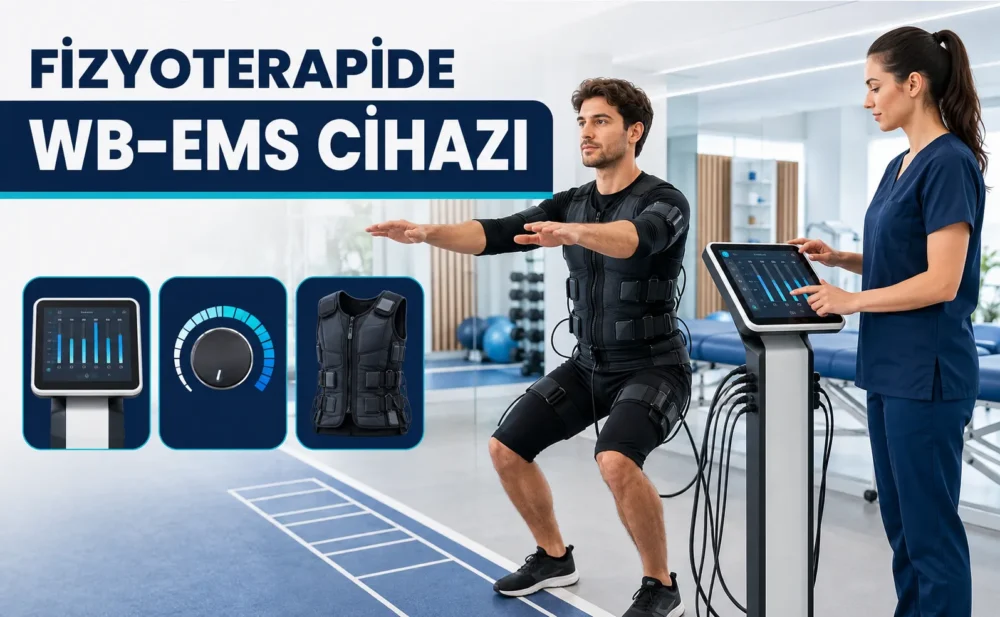
What Is WB-EMS?
WB-EMS, or whole-body electrical muscle stimulation, is a modern technology used in physiotherapy and rehabilitation. By activating the muscles through electrical stimulation, this system offers an effective solution for a variety of health problems. It is applied by placing electrodes on the skin, with the aim of working all of the body’s muscle groups at the same time. EMS devices for physiotherapy are used for a range of purposes, especially muscle weakness, rehabilitation and improving physical performance.
The working mechanism of WB-EMS is based on sending signals directly to the muscle fibres to make them contract. During sessions, the device sends electrical signals at specific frequencies, allowing the muscles to work quickly and effectively. As an alternative to conventional exercise methods, this application aims to achieve high efficiency with low energy expenditure. Using electrical impulses in this way offers physiotherapists a great advantage in a variety of therapeutic applications.
The purpose of using WB-EMS in physiotherapy is generally to support muscle development and speed up physical rehabilitation. It has also been observed to offer an effective solution in preventing muscle atrophy and managing pain. Over time, research on the effects of these devices has provided important insights into the role of muscle stimulation in rehabilitation. The use of EMS devices in physiotherapy has become widespread for speeding up people’s treatment and improving their sports performance.
The Importance of WB-EMS in Physiotherapy Centres
WB-EMS (whole-body electrical muscle stimulation) devices are an innovative technology that health professionals in physiotherapy centres can use in a variety of therapy processes. By working the muscles through electrical stimulation, an EMS device for physiotherapy has the potential to speed up patients’ rehabilitation. In addition to conventional physiotherapy, this method offers important advantages especially in treating muscle weakness, managing pain and treating injuries.
WB-EMS helps patients work by targeting their muscles, providing benefits such as increased muscle mass and improved muscle tone. These results increase the effectiveness of treatment while allowing patients to feel less tired and less pain during the session. Using an EMS device for physiotherapy therefore significantly increases patient satisfaction.
In addition, WB-EMS devices allow physiotherapists to apply their treatment plans more flexibly. Adjustments can be made during therapy sessions according to each patient’s individual needs, making treatment more targeted and effective. Thanks to the different programmes the devices offer, patients’ progress can be monitored closely and quick action can be taken when needed.
In conclusion, integrating WB-EMS technology into physiotherapy centres has an important place in modern rehabilitation approaches. The use of these devices contributes to physiotherapy and helps improve patients’ overall condition. That is why choosing an EMS device for a physiotherapy centre is considered critical for improving the quality of treatment.
Features to Consider When Choosing a Device
When choosing a WB-EMS device for physiotherapy, there are several key features to consider. First, the device’s power is very important. A device’s power determines its effect on muscle stimulation. Devices that deliver more energy can help achieve more effective results. However, this power must also be adjustable to the most suitable level with users’ comfort in mind.
Another critical feature is the range of programme options. Given the variety of treatment methods and needs, it is useful for the device to offer a large number of programmes. Beyond physiotherapeutic applications, users should be able to use these programmes to reach different goals such as increasing muscle strength or reducing muscle fatigue. This variety makes it possible to carry out applications suited to users’ individual needs.
Ease of use is also an important factor in physiotherapy centres. The device’s control panel should be easy to understand and offer users an intuitive experience. Otherwise, both the therapist and the patient may struggle to use the device effectively. The device’s portability and set-up should also be assessed in terms of ease of use.
Safety standards are another important feature of the WB-EMS device you choose. Devices must comply with safety regulations and standards. Guaranteeing users’ safety is particularly important in physical therapy. Checking the device’s certificates and safety test documents is therefore a critical stage in buying an EMS device for physiotherapy.
Comparison of Different WB-EMS Device Models
WB-EMS devices used in physiotherapy play an important role in rehabilitation and muscle strengthening through electrical muscle stimulation. There are many different brands and models on the market, which can create uncertainty for physiotherapists about making the right choice. In this section, we compare the features of some popular models in terms of their use as EMS devices for physiotherapy.
Our first model is the X series WB-EMS device. This model offers 16 independent channels that can be adjusted to users’ needs. In addition, its user-friendly interface makes therapists’ work easier during sessions. Another advantage is its light design, which makes it easy to carry and use. Its price range is on average between 5,000 and 7,000 TRY.
Next, let us look at the Y series device. This model offers 12 channels but has more advanced analysis software. User feedback shows that this device has received very positive comments about the precision of its therapeutic frequency and power settings. Slightly more expensive, this model costs around 8,000–9,000 TRY.
Finally, the Z series device stands out as both a portable and versatile option. This model also provides more freedom of movement thanks to its wireless connectivity. Although it has 10 channels, it offers a wide range of applications. Its price range generally varies between 6,000 and 8,000 TRY.
When choosing between these different WB-EMS devices, factors such as the user’s needs, budget and expected treatment outcomes should be taken into account. The features each device offers and user feedback will guide the choice of the most suitable EMS device for physiotherapy. Properly evaluating this wide range of devices can significantly improve physiotherapy processes.
Areas of Use and Target Groups
As EMS devices for physiotherapy, WB-EMS devices have a wide range of uses through integration with various physiotherapy methods. Their areas of use generally focus on sports rehabilitation, pain management and muscle strengthening. Working through electrical stimulation of the muscles, these devices stand out as an effective tool in treating various physical conditions and in rehabilitation.
In sports rehabilitation, WB-EMS devices are used to prevent athletes’ injuries and speed up the treatment of existing injuries. Stimulating the muscles electrically increases blood flow and supports recovery. These devices can also be used to increase athletes’ muscular endurance and improve their performance.
In pain management, an EMS device for physiotherapy is used to reduce pain by stimulating the muscles in painful areas. Especially in chronic pain, this electrical stimulation technique helps reduce the perception of pain by improving nerve conduction. Patients may feel considerable relief after sessions.
For muscle strengthening, WB-EMS devices are very effective in working weak muscle groups. Older people or those who have lost physical strength due to illness can increase their muscle tone with the help of these devices and carry out their daily activities more comfortably. In this way, they can both maintain their physical health and improve their quality of life.
In conclusion, WB-EMS devices are used across a wide range of patient groups and treatment methods. Their potential in sports rehabilitation, pain management and muscle strengthening underlines the importance of these devices in physiotherapy.
Training and Certification Process
Using WB-EMS (whole-body electromyostimulation) devices effectively in physiotherapy is not limited to knowing the devices’ technical features; it also requires taking part in adequate training and certification processes. Physiotherapists must have a certain set of knowledge and skills to use these devices as efficiently as possible. This process is critical for both safe use and improved patient outcomes.
First of all, physiotherapists are expected to have theoretical knowledge of the basic principles of WB-EMS devices, application methodologies and bioelectrical stimulation systems. In addition, it is important for them to understand how the device works in terms of its anatomical and physiological effects. Training programmes usually offer a comprehensive curriculum on this subject, helping physiotherapists gain the knowledge needed to use the device correctly.
The training physiotherapists receive should also include developing clinic-specific application protocols. Hands-on training gives participants the opportunity to reinforce the practical aspects of using an EMS device in physiotherapy by working with different patient profiles. Certification usually takes place after the training is completed, and participants earn a certificate by consolidating their theoretical knowledge with practical exams.
In conclusion, success in physiotherapy with WB-EMS devices depends on effective training and certification processes as well as physical and technical knowledge. It is therefore necessary for physiotherapists to attend such training in order to specialise in the field.
Device Care and Maintenance Protocols
Regular maintenance is necessary for WB-EMS devices to work efficiently and last a long time. This both improves the device’s performance and is vital for safe use. When using an EMS device for physiotherapy, following specific maintenance protocols is a critical step towards safe and effective results.
First of all, cleaning the device is of primary importance. After use, it is recommended to wipe the electrodes and the outer surface of the device with a damp cloth. Chemical cleaning agents or abrasive products should not be used. Such products can damage the device’s materials and shorten its life.
The electrodes also need to be checked regularly. The surface of the electrodes should be clean and undamaged. Keeping electrical connections secure is an important factor in improving the device’s performance. If any signs of wear or damage are observed during or after use, they should be replaced immediately.
In addition, the device’s internal components and software updates are also part of the maintenance procedures. Updating the software in line with the user manual helps the device perform better. It is also important to fulfil the usage requirements before using the device in order to minimise user errors.
Regular training for the professionals who use the EMS device for physiotherapy supports the application of the correct techniques and maintenance rules. This training is necessary to ensure the equipment is used safely and to increase its effectiveness. Strictly following the maintenance protocols keeps the device in good condition while also putting patient safety first.
In conclusion, there are many points to consider in the maintenance of WB-EMS devices. These processes, ranging from cleaning to training, extend the device’s life and improve its performance. Applying these protocols in physiotherapy centres both increases the device’s effectiveness and ensures patient safety.
Cost Analysis and Payback Period
A cost analysis is very important when choosing an EMS device for a physiotherapy centre. Making an economical investment means not only evaluating the initial costs but also taking into account the long-term benefits the device will provide. The costs of WB-EMS devices can vary according to the model, features and additional services offered.
When analysing the payback period (ROI), it is necessary to take into account the device’s maintenance and operating costs as well as the initial investment. By speeding up the centre’s operations, an EMS device for physiotherapy makes it possible to serve more patients per session. This indirectly contributes to higher revenue. For example, carrying out more sessions in less time increases the business’s overall profitability.
Recurring costs, such as replacing membranes and electrodes, should also be taken into account when choosing a device. These should be included in the total cost analysis and integrated into financial planning. Thanks to the advantages they offer health professionals, WB-EMS devices make patients’ treatment more effective while making a positive contribution to businesses’ budgets.
Finally, it is a critical step for long-term success that physiotherapy centre owners analyse in detail the economic advantages they will gain from buying the device and the payback period. Depending on the size of the investment, the decisions businesses make in this process can increase the efficiency of healthcare services and their impact on patients.
Future Trends and Innovations
In physiotherapy, WB-EMS (whole-body electromyostimulation) technology offers innovative solutions to speed up patients’ treatment and achieve effective results. The evolution of this technology in the coming years will bring many benefits for practitioners and patients. First of all, the growing demand for EMS devices in physiotherapy is directly linked to accelerating research and technological development. This will lead to more effective and user-friendly devices.
Recently, the integration of smart technologies into physiotherapy has been attracting attention. Sensors and artificial intelligence applications play an important role in monitoring the patient’s condition and optimising treatment. As a result, real-time feedback on patients’ performance can be provided while using an EMS device for physiotherapy, allowing treatment to be personalised further. In addition, thanks to remote monitoring systems, physiotherapists can follow their patients’ progress and intervene quickly when necessary.
In addition, the potential of WB-EMS technology in rehabilitation is increasingly being highlighted. During recovery from sports injuries, the use of these devices helps patients return faster and more effectively by increasing muscle strength. With new-generation EMS devices, physiotherapists will be able to develop more comprehensive treatment protocols, ensuring that users achieve the best results.
In conclusion, the development of WB-EMS technology in physiotherapy will progress in parallel with innovative trends and the rise of these devices. These developments offer great advantages for both physiotherapists and patients.
