
What Is EMS?
Electrical muscle stimulation (EMS) is a training method based on the principle of stimulating the muscles through neural impulses. EMS sends electrical currents through electrodes placed on specific areas of the body. These currents target the muscle fibres and make them contract. This provides a more effective and intense workout than the movements the muscles perform naturally.
EMS has a wide range of applications, offering benefits in many areas from improving athletes’ performance to rehabilitation and from body shaping to fat burning. In particular, EMS fitness makes it possible to carry out workouts that are difficult to do in conventional settings effectively and in a short time. This is a great advantage for people with limited time.
The effects of EMS technology on muscle development are considerable. By working the muscle fibres more intensely, it allows them to strengthen quickly. This helps increase muscle mass and speed up fat burning. In addition, an EMS training programme can also be integrated into conditioning goals. Users can aim to achieve a fitter, healthier body by supporting fat burning and muscle development.
In conclusion, when the EMS system is included in training programmes, it can increase the effectiveness of combining it with cardio exercise. During intensive periods such as summer training, this type of workout is an ideal option for achieving more effective results.
What Is Cardio?
Cardio is a term covering aerobic exercises that strengthen your heart and improve your health. Its main aim is to raise the heart rate by increasing blood circulation throughout the body. In addition to improving general health, cardio exercises also play an important role in fat burning and conditioning. These exercises support heart and lung health while also increasing endurance.
Cardio can be done in many different forms. Activities such as walking, running, cycling, swimming and dancing are the most common. Depending on their intensity, these activities may take different lengths of time. For example, a light walk can usually be done for 30 minutes, while a more intense run or cycling session may last between 20 and 60 minutes. These types of cardio exercise are suitable for both beginners and experienced athletes.
In addition, choosing outdoor activities during summer training can increase people’s motivation. Interacting with nature can bring benefits for both physical and mental health. After cardio exercise, the body also continues to burn calories, and cardio is effective in improving athletes’ performance. When combined with cardio, EMS fitness can increase the effectiveness of training. This is important for supporting heart health and improving overall fitness.
EMS and Cardio: Using Them Together
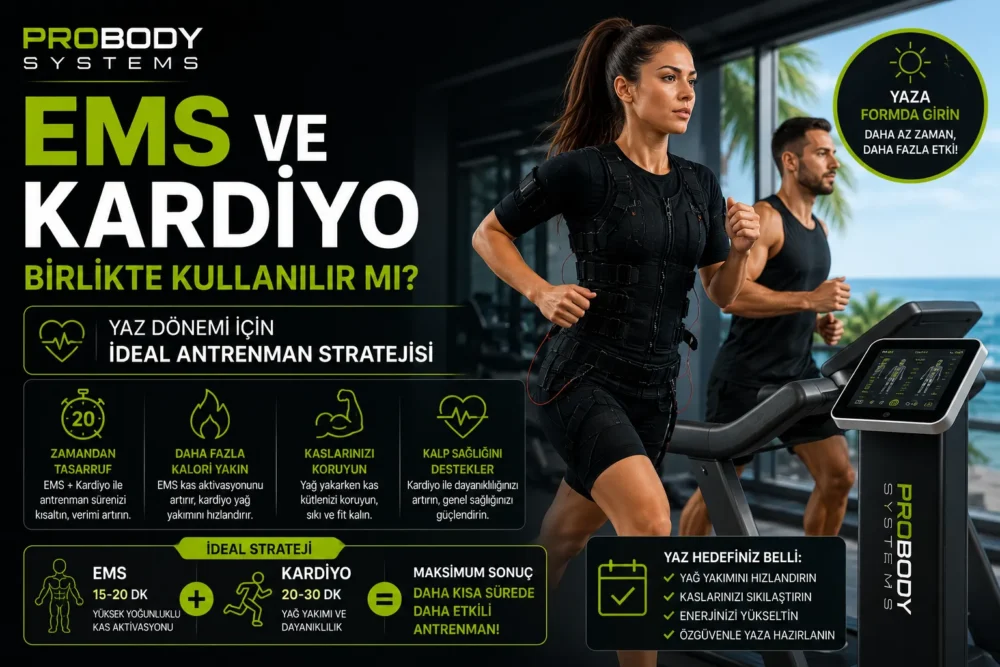
In the international sports community, combining EMS (electrical muscle stimulation) with cardio exercise is often discussed by athletes and fitness enthusiasts. While an EMS training programme works the muscles through electrical stimulation, cardio exercise generally targets heart and lung health. Using these two methods together can offer many benefits for both conditioning and fat burning.
Combining EMS and cardio can increase training efficiency. For example, EMS applied after an intense cardio session can further strengthen the muscle groups that have been worked. In this case, fat burning speeds up while muscle recovery is also supported. However, it is true that athletes need to combine these two methods in a balanced way. Overloading can lead to muscle fatigue and injuries. It is therefore very important that people creating a training programme plan with the effectiveness of both methods in mind.
At the same time, balancing cardio exercise and EMS in your weekly programme during summer training will both speed up fat burning and improve sports performance. For example, doing cardio on a few days a week and an EMS training programme on other days can create an effective balance in your training routine. Thanks to this kind of integration, endurance increases while muscle building is also supported. In conclusion, when EMS and cardio are used together in a suitable routine, they are effective methods that can help people reach their goals.
Training Goals for Summer
Summer offers many people an opportunity to review and renew their fitness goals. With sunny days, outdoor activities and holidays, staying in shape and reaching body goals becomes important during the summer months. Setting body development and weight loss goals for the summer therefore plays a critical role in the effectiveness of training programmes.
In the summer season, people usually set goals focused on fat burning and conditioning. In addition, improving body composition for aesthetic reasons also becomes an important goal. In this context, the various advantages of EMS fitness training provide effective support for body development and weight control. Training programmes using EMS technology allow users to achieve high efficiency in a short time, which makes it easier to reach summer goals.
In addition, the increase in outdoor activities during the summer months also increases the importance of cardio exercise. Activities such as walking, running or swimming are ideal for burning calories and increasing overall aerobic capacity. Together with such activities, an EMS training programme can help achieve optimal results during summer training. For example, including both EMS training and conventional cardio exercise in your weekly training plan promotes fat burning and improves fitness.
In conclusion, fitness goals set for the summer should be planned carefully to raise people’s physical fitness levels and meet their aesthetic expectations. With the right training strategies, the summer months can become a very beneficial period for health and vitality.
The Best Training Programmes for EMS and Cardio
Creating an effective training programme to raise energy levels and support fat burning in the summer months is an important goal. EMS fitness and cardio exercise offer a great combination for achieving it. There are suitable EMS training programme options for both beginners and advanced athletes.
EMS training programmes recommended for beginners are generally limited to one or two sessions a week. These programmes are designed to get the body used to EMS devices and strengthen the main muscle groups. Making the muscles work with gentle stimulation in the first sessions is the first step in the conditioning process. Adding cardio exercise such as walking or light jogging to improve circulation will also increase the effectiveness of these sessions.
More experienced people can follow an EMS training programme with up to two sessions a week, combined with additional cardio days. These programmes make more intense work possible by targeting various muscle groups. For example, combining EMS with interval training can maximise fat burning and endurance. Fun outdoor activities designed especially for the summer can be added as part of this programme. Activities such as running or cycling on the beach can be both enjoyable and effective when combined with cardio and EMS.
In conclusion, EMS and cardio training programmes provide an ideal strategy for the summer and appeal to different fitness levels. With a suitable programme, effective results can be achieved in both conditioning and fat burning.
Healthy Eating and Supplements
Developing healthy eating habits is important to support EMS and cardio exercise, which are among the ideal training programmes for summer. In particular, a balanced, nutritious diet should be followed to reach fat-burning and conditioning goals. During this period, fresh fruit and vegetables, whole grains and protein sources play a critical role in improving body composition. Paying attention to fluid intake also improves performance by offsetting the effect of hot weather.
During summer training, supplements may also be used depending on the body’s needs. Protein powders, amino acids and creatine can be valuable support for people following an intensive exercise routine such as an EMS training programme. These supplements benefit muscle repair and development, increasing overall training efficiency. However, it is recommended to consult a dietitian or nutritionist before starting to use such products.
In addition, while low-intensity cardio supports fat burning, it is important to pay attention to nutrient intake during aerobic activity. Healthy fats, fibre and adequate vitamins and minerals help the body perform better during training. The summer months are ideal for outdoor activities, so EMS and cardio training combined with the right nutrition opens the door to a healthy lifestyle.
Points to Consider When Using EMS
EMS, or electrical muscle stimulation, is an innovative technology that can increase the efficiency of training programmes. However, there are some points to bear in mind when using this technology. First, ensuring the correct use of EMS devices is a basic prerequisite. During the session, it is important that the electrodes placed on the skin are in the right position and set at an appropriate intensity. Incorrect positioning may fail to target the desired muscle group and lead to a loss of performance.
When creating an EMS training programme, people’s physical condition, age and medical history should be assessed carefully. Otherwise, potential risks such as muscle and joint injuries may arise. Consulting a doctor before using EMS is a critical step, especially for people with a history of heart disease, neurological conditions or high blood pressure. In addition, leaving enough time between EMS sessions allows the muscles to rest and recover, increasing the success rate of training programmes.
For EMS workouts to be effective, sessions need to be carried out regularly. It is also important to reach the right body temperature, so it is useful to warm up with a short cardio exercise before the session. Taking all these factors into account, a properly performed EMS session can support fat-burning and conditioning goals. For summer training, this method also allows participants to exercise more effectively.
Success Stories and Experiences
Combining EMS and cardio training has produced remarkable success stories for many people. People who have reached their physical goals by combining these methods often share the effects of their EMS fitness and cardio workouts. In particular, those looking for ideal summer training strategies say they have achieved better results by combining these two methods.
For example, one person who expected to lose 5 kilograms with conventional cardio alone found that the process was faster thanks to cardio combined with an EMS training programme. This experience offered ways to improve fitness as well as increase fat burning. It has been observed that EMS workouts stimulate the muscles and also speed up the metabolism.
In addition, people who gain more energy and endurance say that regularly doing cardio and EMS training during the summer has made exercise more enjoyable. With this combination, they have achieved faster results and increased their motivation to keep training consistently.
Finally, the success stories of people who combine EMS and cardio involve not only physical but also mental transformation. Regularly doing this type of training increases participants’ self-confidence and has a positive effect on their overall quality of life. These success stories continue to be an important source of motivation for others.
Conclusion and Recommendations
Using EMS and cardio exercise together offers a very effective strategy for summer training. Both an EMS training programme and cardio exercise provide important benefits for fat burning and conditioning. In hot weather such as the summer, combining these two types of training in a balanced way both improves your performance and improves your body composition.
EMS fitness works through special electrodes that target the muscles and can act directly on specific areas of the body. Thanks to this feature, when combined with intense cardio exercise, it supports muscle development while also optimising fat burning. Especially during summer training, wearing lighter clothes and growing aesthetic concerns bring body appearance to the fore. At this point, the fast results provided by EMS can boost motivation.
At the same time, cardio exercise is necessary to improve heart health and endurance. Activities such as walking, running or cycling not only burn calories but also benefit general health. When applying the EMS and cardio combination, following this programme on at least three days a week, with EMS sessions spaced at least 48 hours apart, will both help improve conditioning and raise sports performance.
We recommend that readers create a programme that suits them when combining EMS and cardio exercise and take their body’s needs into account. In addition, optimising rest and nutrition before and after training will help you reach your goals throughout the summer.
